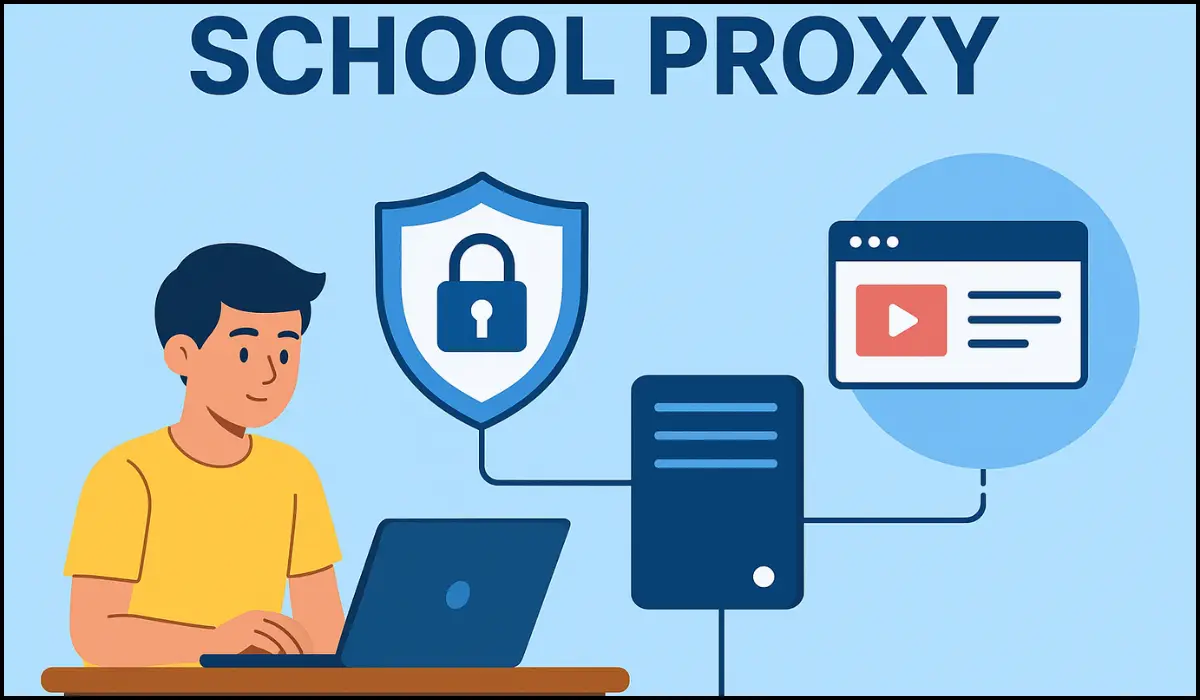
Schools often restrict websites to keep students focused on studies. Platforms like YouTube, social media, or even certain educational sites may be blocked. While the intention is good, students sometimes need access to specific online resources for research, learning projects, or collaborative work. Here’s how it works:
Browse privately, securely and without limits — powered by CroxyProxy style.
Here’s how it works:
What is a School Proxy?
How it works:
- You type a website URL into the proxy.
- The proxy server requests the website.
- The content is delivered to you, bypassing the school firewall.
Key Features:
- Hides your IP address.
- Encrypts your online traffic.
- Allows access to blocked sites safely.
Why Use a School Proxy?
-
Access Educational Resources: Some schools block platforms like YouTube or certain research websites. A proxy helps you access them for learning purposes.
-
Privacy Protection: Your identity and browsing history remain private while using a trusted proxy.
-
Safe and Secure Browsing: Reputable proxies filter malware and phishing threats.
-
Fast Internet Access: Optimized proxies deliver content quickly, even from restricted networks.
Types of School Proxies
There are multiple types of school proxies available:
Web-based Proxies:
- Accessible via browser.
- No software installation needed.
- Examples: ProxySite, KProxy.
VPN-based Proxies:
- Encrypts traffic completely.
- Requires software installation.
- Example: Hide.me, NordVPN.
Browser Extensions:
- Lightweight and easy to use.
- Directly integrate into Chrome, Firefox, or Edge.
- Example: Hoxx VPN Proxy, SetupVPN.
Read More – Web Proxy – Secure & Fast Access to Blocked Websites
Top Recommended School Proxies
| Proxy Tool | Features | Security | Speed |
|---|---|---|---|
| ProxySite | Free, no signup, web-based | High | Fast |
| Hide.me | VPN proxy, multiple locations | Very High | Very Fast |
| KProxy | Browser extensions, easy to use | Medium | Medium |
| Hoxx VPN Proxy | Chrome & Firefox support | High | High |
Safety Tips for Students
Avoid unknown proxy websites—they can contain malware.
- Do not enter personal or sensitive information while using a proxy.
- Always use proxies for educational purposes, research, or collaboration.
- Keep antivirus software and browser up-to-date.
- Prefer reputable proxies with good reviews.
Frequently Asked Questions
Q1: Is using a school proxy legal?
A: Yes, if used for educational purposes. Avoid using it to access illegal content.
Q2: Can proxies slow down internet speed?
A: Free proxies may be slower, but paid or reputable proxies usually maintain good speed.
Q3: Can I access YouTube or Google Docs with a proxy?
A: Yes, most trusted proxies allow access to educational content on YouTube and Google platforms.
Q4: Do I need to install software to use a proxy?
A: Some proxies are web-based (no installation needed), while VPN-based proxies require software.
Q5: Are school proxies safe for students?
A: Yes, if you use trusted services with encryption and privacy protection.